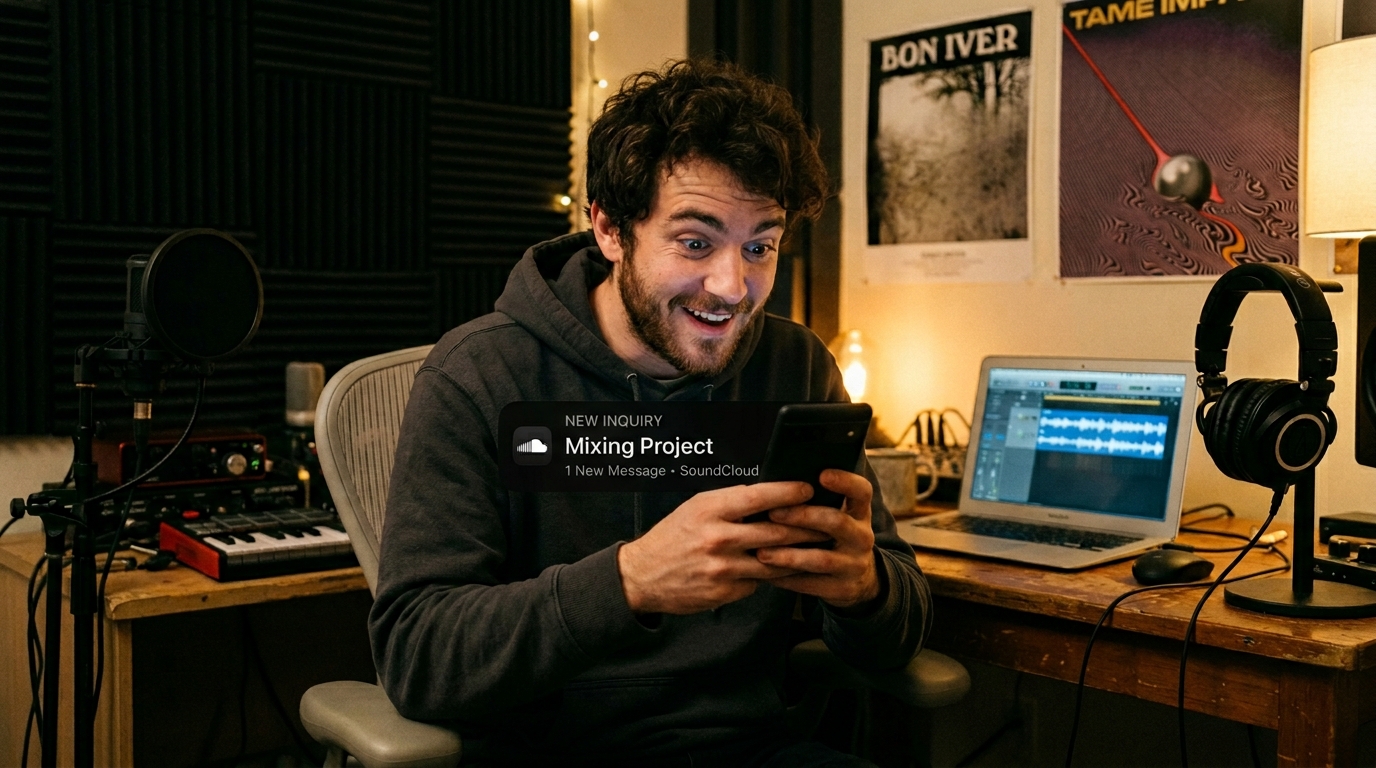
One of the biggest challenges for beginner mix engineers is getting that first paying client.
Many people spend months or even years improving their mixing skills without ever working with a real customer.
The good news is that getting your first client is often the hardest step. Once you have completed a few successful projects, finding additional work becomes much easier.
Before looking for your first client, make sure you have at least a few strong examples of your work. Even a simple portfolio can significantly increase your chances of getting hired. If you haven’t created one yet, read our guide on how to build a music production portfolio.
Why Most Beginners Struggle
Many new mix engineers believe clients will automatically appear once their mixes become good enough.
Unfortunately, this rarely happens.
Artists cannot hire someone they have never heard of.
Even talented engineers need to actively create opportunities.
Build a Small Portfolio First
Before approaching clients, create a portfolio that demonstrates your abilities.
You do not need dozens of projects.
Even three to five strong examples can be enough.
Your portfolio may include:
- Personal projects
- Collaborations
- Practice mixes
- Remixes
- Independent artist projects
The goal is to show potential clients what you can do.
Offer Free or Discounted Mixes Strategically
Many professionals recommend doing a few free or low-cost projects when starting out.
This helps you:
- Build experience
- Create portfolio material
- Collect testimonials
- Learn how to work with clients
However, avoid staying in the free stage forever.
The goal is to gain experience, not become permanently unpaid.
Work With Independent Artists
Independent musicians are often the best source of early opportunities.
Many artists need help but cannot afford expensive engineers.
Look for artists who are actively releasing music and improving their careers.
These musicians are often more likely to invest in mixing services.
Use Social Media Correctly
Many beginners spend all their time trying to gain followers.
Follower count is not the most important factor.
Instead, focus on demonstrating your expertise.
Examples include:
- Mixing tips
- Before-and-after examples
- Project breakdowns
- Studio content
- Audio comparisons
Useful content builds trust.
Trust creates clients.
Join Music Communities
Online communities can be valuable places to meet artists and producers.
Examples include:
- Music production groups
- Audio engineering communities
- Independent artist forums
- Local musician networks
The goal is not to spam your services.
The goal is to build relationships.
People hire people they trust.
Learn How to Communicate Professionally
Many beginners focus entirely on technical skills.
Communication is equally important.
Clients appreciate engineers who:
- Reply quickly
- Meet deadlines
- Explain things clearly
- Remain professional
- Accept feedback gracefully
A great client experience often leads to repeat work.
Ask for Testimonials
After completing a successful project, ask the client for a short testimonial.
Positive feedback increases credibility.
Future clients feel more comfortable hiring someone who has already delivered good results for others.
Focus on Repeat Clients
Many engineers spend all their energy searching for new customers.
In reality, repeat clients are often more valuable.
A satisfied artist may return for:
- Singles
- EPs
- Albums
- Future releases
One happy client can become a long-term source of work.
Do Not Compete Only on Price
Many beginners try to become the cheapest option.
This can attract difficult clients and make it hard to increase prices later.
Instead, focus on value.
Provide:
- Good communication
- Reliable delivery
- Quality work
- Helpful feedback
Value creates trust.
Trust creates referrals.
The Reality
Your first client may not arrive immediately.
Most engineers spend time building skills, relationships, and credibility before receiving consistent work.
The process can feel slow at first.
However, every completed project makes the next opportunity easier to obtain.
Many beginners assume they should wait for clients to discover them. In reality, actively learning how to find music production clients will dramatically increase your chances of landing your first paid project.
A Simple Action Plan
If you want your first mixing client, focus on these steps:
- Build a small portfolio.
- Complete a few projects.
- Collect testimonials.
- Connect with independent artists.
- Share useful content.
- Communicate professionally.
- Deliver excellent results.
These fundamentals have helped many engineers build successful careers.
Getting your first client is an important milestone, but building a sustainable career means attracting new clients consistently and encouraging existing clients to return. Once you’ve completed your first few projects, our guide on how producers get repeat clients will help you turn one-time customers into long-term relationships.
Final Thoughts
Getting your first mixing client is rarely about luck.
It is usually the result of preparation, visibility, and persistence.
The engineers who succeed are often the ones who consistently improve their skills while actively building relationships within the music community.
Your first client may be difficult to get.
Your second and third become much easier when you deliver great work and create a positive experience.