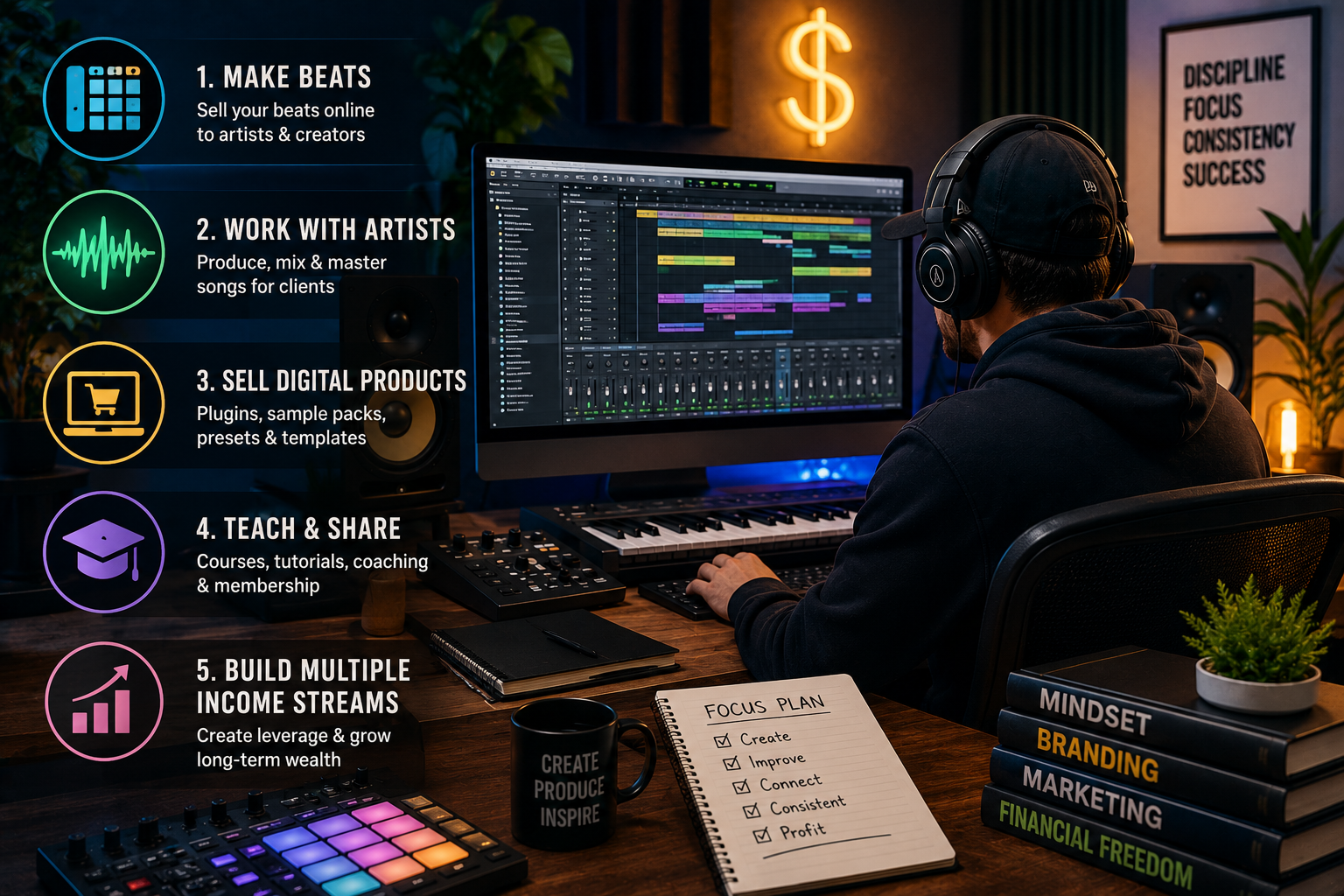
Many aspiring music producers dream of turning their passion into a source of income.
Some hope to earn a little extra money on the side, while others want to build a full-time career around music.
The good news is that you don’t need millions of streams, a record deal, or a viral hit before you can start earning money. Many successful producers begin by offering services, building relationships, and solving real problems for artists and creators.
The challenge is that most people focus on only one income source while successful producers often combine several. They also invest time in building an audience that supports their work over the long term. If you haven’t started yet, check out our guide on How to Build a Fanbase as an Independent Artist.
In this guide, we’ll explore practical ways music producers can earn money and build a sustainable career.
The Biggest Misconception
Many beginners believe they need millions of streams, a record deal, or a viral hit before they can earn money.
In reality, most working producers earn income through services, skills, and relationships long before they achieve mainstream success.
The music industry offers more opportunities than ever before.
Music Production Services
One of the most direct ways to earn money is by producing music for artists.
Many singers, rappers, content creators, and independent musicians need help creating professional tracks.
Services may include:
- Beat production
- Song arrangement
- Instrument programming
- Vocal production
- Full song production
As your portfolio grows, so does your ability to charge higher rates.
When you’re just starting out, focus on delivering excellent results rather than charging premium prices immediately. A few satisfied clients can lead to referrals, testimonials, and repeat work, which are often more valuable than trying to maximize your income from your very first project.
Mixing and Mastering
Many producers expand into mixing and mastering services.
Artists often need help improving the sound quality of their recordings.
This can become a reliable source of income because every song released requires some form of mixing and mastering.
The better your results and reputation become, the easier it is to attract repeat clients.
Beat Selling
Selling beats has become a popular business model.
Producers create instrumentals and license them to artists.
Advantages include:
- Scalable income
- Global audience
- Passive sales potential
However, competition is extremely high.
Success often requires strong marketing, consistency, and a large catalog of beats.
Many new producers expect to earn significant income after uploading just a few beats. In reality, successful beat sellers often build large catalogs over time while consistently promoting their work. Treat beat selling as a long-term business rather than a quick source of income.
Film Scoring and Media Music
Music producers can also earn money by creating music for:
- Short films
- Feature films
- Advertisements
- YouTube videos
- Podcasts
- Games
This type of work often values reliability and collaboration just as much as technical skill.
In my experience, working on media projects is very different from producing your own music. You’ll often receive feedback from directors or clients, work under deadlines, and revise your work multiple times before it’s approved. Strong communication skills and professionalism can be just as important as your musical ability.
Content Creation
Many producers earn income by creating educational content.
Examples include:
- YouTube videos
- Blog articles
- Online courses
- Workshops
- Tutorials
Teaching others can become a valuable secondary income stream.
It also helps establish authority within the industry.
Content creation doesn’t have to mean becoming a full-time YouTuber. Even sharing helpful tips, behind-the-scenes moments, or lessons you’ve learned while producing music can gradually build trust with your audience. Over time, that trust can lead to client inquiries, collaborations, and additional income opportunities.
Sample Packs and Presets
Some producers create digital products such as:
- Sample packs
- Drum kits
- MIDI packs
- Presets
- Templates
Unlike client work, digital products can continue generating revenue after they are created.
This makes them attractive long-term assets.
Teaching Music Production
Many beginners are willing to pay for guidance.
Teaching can include:
- Private lessons
- Group classes
- Online coaching
- Workshops
If you enjoy helping others learn, teaching can become a rewarding source of income.
Freelance Audio Services
Many producers offer additional services such as:
- Audio editing
- Podcast editing
- Dialogue cleanup
- Sound design
- Voice editing
These skills are often in demand outside the music industry as well.
Build Multiple Income Streams
One of the biggest differences between struggling producers and successful producers is diversification.
A producer who relies on only one source of income is vulnerable when work slows down.
Many successful producers combine several revenue streams.
For example:
- Production services
- Mixing
- Mastering
- Teaching
- Content creation
- Digital products
This creates greater financial stability.
Rather than trying to build every income stream at once, focus on mastering one or two first. As your experience and confidence grow, you can gradually expand into additional services or products. A steady, sustainable approach is usually more effective than trying to do everything from the beginning.
Why Most Producers Struggle
Many talented producers fail to earn money because they focus only on creating music.
Common mistakes include:
- Ignoring networking
- Avoiding marketing
- Not building a portfolio
- Depending on a single income source
- Giving up too early
Music is both an art and a business.
Understanding both sides is important.
The Reality
Making money as a music producer is possible, but it rarely happens overnight.
Most successful producers build their careers gradually through skills, relationships, consistency, and persistence.
The people who succeed are usually those who continue improving while actively creating opportunities for themselves.
Final Thoughts
There are many ways to make money as a music producer.
The key is not finding a single perfect income source.
The key is building a collection of valuable skills that solve problems for artists, creators, and clients.
The more value you provide, the more opportunities become available.
Treat music production as both a creative craft and a professional business, and your chances of success increase dramatically.