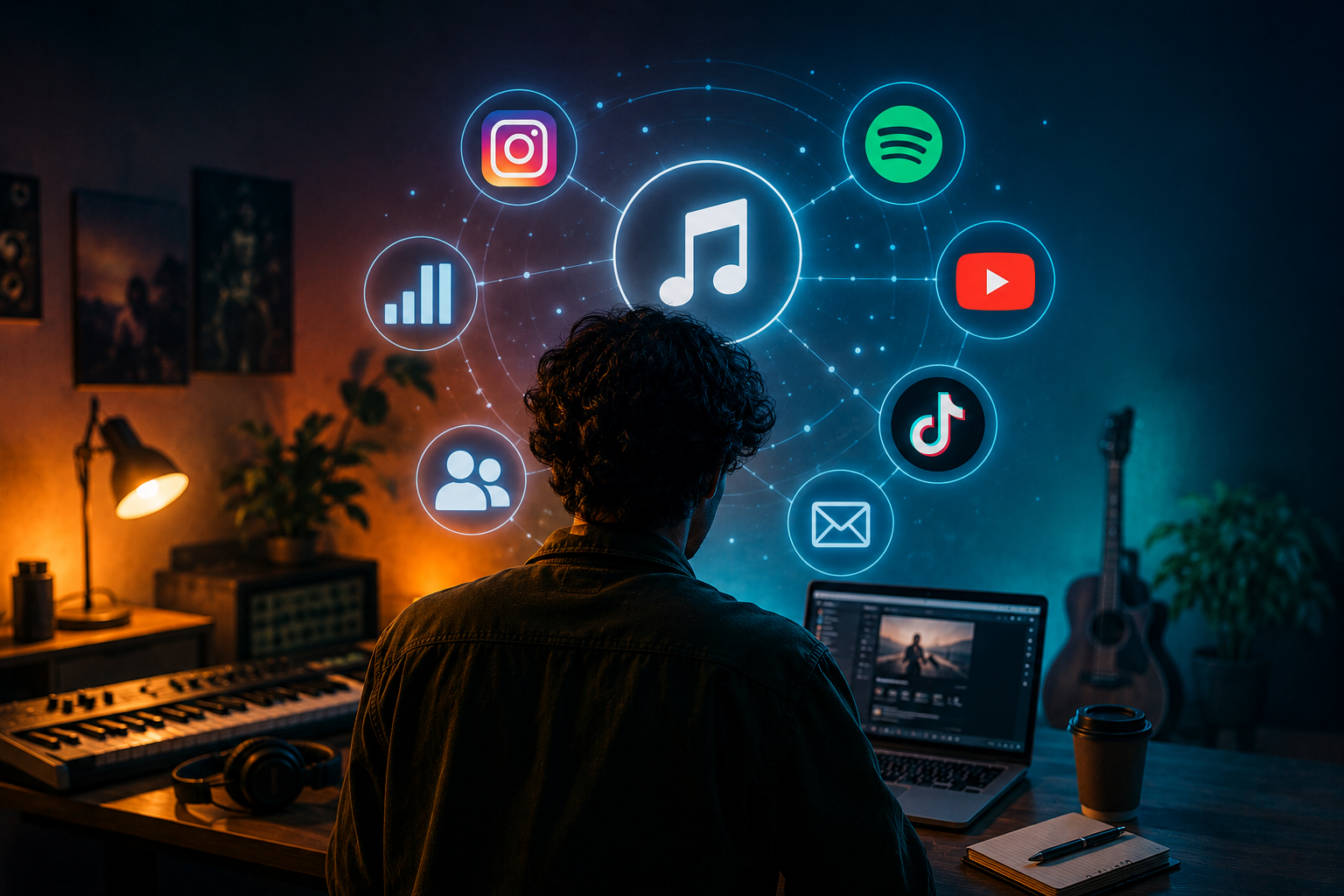
Making great music is only half the battle. If nobody hears your songs, even the best production won’t help you build a successful music career.
Music marketing is the process of getting your music in front of the right audience, building genuine relationships with listeners, and creating opportunities for long-term growth. Whether you’re a music producer, singer, rapper, composer, or independent artist, understanding how to market your music is just as important as improving your musical skills.
In this guide, you’ll learn the fundamentals of music marketing, common mistakes to avoid, and practical strategies that can help you grow your audience without relying on a record label.
Why Music Marketing Matters
Many talented artists believe that good music automatically attracts listeners. Unfortunately, that’s rarely how the music industry works today.
Thousands of songs are released every day across streaming platforms. Without a marketing strategy, your music can easily get lost among millions of other releases.
Effective music marketing helps you:
- Reach new listeners.
- Build a loyal fanbase.
- Increase streams and followers.
- Attract industry opportunities.
- Generate more income from your music.
Marketing isn’t about tricking people into listening. It’s about helping the right audience discover music they’ll genuinely enjoy.
Build Your Brand Before You Promote
Before spending time or money on promotion, make sure people can clearly understand who you are as an artist.
Your brand includes:
- Your artist name
- Your visual identity (logo, colors, artwork)
- Your genre and musical style
- Your personality and story
- The type of audience you want to attract
A strong brand makes your music more memorable and helps listeners connect with you beyond a single song.
Remember, people don’t just follow music—they follow artists they relate to and trust.
Focus on One or Two Platforms
One of the biggest mistakes independent artists make is trying to be active on every social media platform at once.
Instead, choose one or two platforms where your target audience spends the most time.
For example:
- Instagram for short-form videos, behind-the-scenes content, and community building.
- YouTube for music videos, tutorials, covers, and long-form content.
- Spotify for building long-term streaming growth and playlist exposure.
It’s far better to consistently post quality content on two platforms than to post inconsistently on six.
As your audience grows, you can gradually expand to additional platforms without sacrificing quality.
Think Like a Business, Not Just an Artist
Many independent artists see marketing as something separate from making music. In reality, your music and your marketing should work together.
Every song you release is a product. Every social media post is an opportunity to build trust. Every conversation with a listener is a chance to create a long-term fan.
Instead of asking:
“How do I get more streams?”
Try asking:
- How can I give people a reason to remember me?
- Why would someone follow me after hearing one song?
- What makes my music different from thousands of others?
The artists who build lasting careers don’t simply chase viral moments. They create a recognizable identity, consistently deliver value to their audience, and keep showing up over time.
Think of your music career as a marathon rather than a sprint. Each song, post, and interaction is another step toward building a loyal audience.
Create Content Consistently
Successful music marketing isn’t about posting only when you release a new song. It’s about staying visible and giving people reasons to follow your journey.
You don’t need expensive equipment or a large team to create engaging content. A smartphone and consistent effort are often enough to get started.
Some content ideas include:
- Behind-the-scenes clips from your recording sessions
- Songwriting or production breakdowns
- Studio setup and workflow
- Practice sessions
- Short performance videos
- Stories behind your songs
- Tips related to your niche
Not every post has to go viral. Consistency builds familiarity, and familiarity builds trust. Over time, that trust turns casual listeners into loyal fans.
Build an Email List and Community
Many artists focus only on gaining followers, but followers are not the same as a community.
Social media algorithms can change at any time, reducing the number of people who see your posts. That’s why it’s important to build direct relationships with your audience.
Consider creating:
- An email newsletter
- A Discord server or Reddit community
- A Telegram or WhatsApp community (if it suits your audience)
These channels allow you to communicate directly with fans whenever you release new music, announce live shows, or launch products and services.
The stronger your community becomes, the less dependent you’ll be on social media algorithms.
Don’t Expect Overnight Success
One of the biggest reasons artists give up is unrealistic expectations.
Building an audience takes time. Most successful independent artists spent years consistently creating music, improving their craft, and connecting with listeners before seeing significant growth.
Instead of chasing viral moments, focus on long-term progress by:
- Releasing quality music consistently.
- Improving your production and songwriting skills.
- Engaging with your audience regularly.
- Learning from analytics and feedback.
- Experimenting with new marketing ideas.
Small improvements made consistently often lead to much bigger results than one lucky viral post.
A Simple Music Marketing Plan for Beginners
If you’re just getting started, you don’t need a complicated marketing strategy. A simple and consistent plan is often more effective.
Here’s an example:
Before Releasing a Song
- Share behind-the-scenes clips from your recording sessions.
- Post teasers or short previews.
- Tell your audience the story behind the song.
- Build anticipation with countdown posts.
Release Day
- Publish your song on all major streaming platforms.
- Share the release across your social media accounts.
- Send an email to your subscribers if you have an email list.
- Ask your audience to save, share, and add the song to their playlists.
After Release
Don’t disappear after release day.
Over the following weeks, continue promoting the song by sharing:
- Live performances
- Acoustic versions
- Behind-the-scenes videos
- Fan reactions
- Lyric explanations
- Production breakdowns
- Short clips for social media
Many artists stop promoting a song after a few days, but consistent promotion often leads to better long-term results than a single launch.
Common Music Marketing Mistakes to Avoid
As you build your music career, try to avoid these common mistakes:
- Releasing music without a promotion plan.
- Posting only when you have something to sell.
- Comparing your progress to other artists.
- Ignoring your existing fans while chasing new ones.
- Buying fake followers or streams.
- Giving up after a few months of little growth.
Real growth comes from consistency, authenticity, and continuously improving both your music and your marketing.
Final Thoughts
Music marketing isn’t about becoming famous overnight. It’s about helping the right people discover your music and giving them a reason to come back.
If you’re serious about building a sustainable career as an independent artist, treat marketing as an essential part of your creative process—not something you do only after releasing a song.
The artists who succeed in the long run are often the ones who consistently create, consistently learn, and consistently connect with their audience.
Frequently Asked Questions
How can independent artists market their music for free?
Independent artists can market their music for free by consistently posting on social media, engaging with their audience, collaborating with other creators, optimizing their streaming profiles, and building an email list. While paid advertising can help, consistency and quality content are often more important in the early stages.
Which social media platform is best for music promotion?
There isn’t a single best platform for everyone. Instagram, YouTube, TikTok, and Spotify all serve different purposes. Choose one or two platforms where your target audience is most active and focus on creating consistent, valuable content.
How long does music marketing take to show results?
Music marketing is a long-term process. Some artists may see growth within a few months, while others may take years to build a loyal audience. Consistency, quality music, and audience engagement are the biggest factors influencing long-term success.
Do I need a record label to market my music?
No. Many independent artists successfully market their music without a record label by using social media, streaming platforms, email marketing, and direct fan engagement.