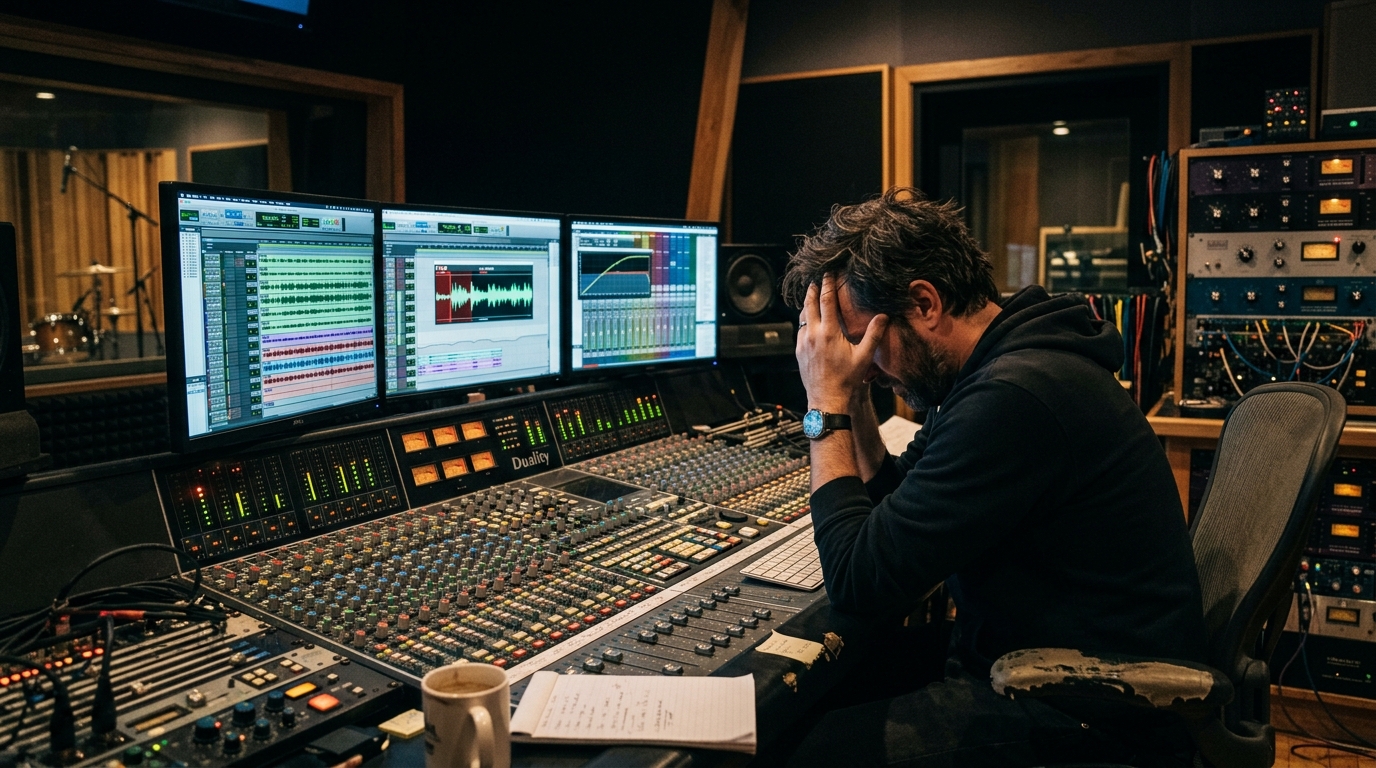
When people start learning mixing, they often believe the secret to professional results lies in expensive plugins, advanced techniques, or complicated signal chains.
In reality, most beginner mix engineers make a much simpler mistake.
They focus on processing before they focus on balance.
A great mix is usually built on strong fundamentals rather than complicated tools.
Understanding this mistake can save years of frustration and dramatically improve your mixes.
Why Beginners Chase Complex Solutions
The internet is full of videos about:
- Advanced EQ techniques
- Multi-band compression
- Saturation chains
- Parallel processing
- Mid-side mastering
- AI-powered plugins
These topics can be interesting, but they often distract beginners from the basics.
Many engineers start adding plugins before the mix itself sounds good.
As a result, they create more problems instead of solving existing ones.
The Power of Volume Balance
Before using any plugin, professional engineers often spend time balancing tracks.
Volume balancing involves adjusting levels so that every element sits naturally within the song.
This includes:
- Vocals
- Drums
- Bass
- Guitars
- Keyboards
- Effects
A balanced mix can sound surprisingly professional even without processing.
Many beginners underestimate how important this step is.
Panning Matters More Than Expected
Another common mistake is leaving everything in the center.
Professional mixes create space by positioning elements across the stereo field.
Effective panning can:
- Improve clarity
- Reduce masking
- Increase width
- Create separation
Before reaching for another EQ plugin, consider whether panning can solve the problem.
Too Many Plugins Create New Problems
Beginners often believe more processing equals a better mix.
A typical beginner session might contain:
- Multiple EQs
- Several compressors
- Saturators
- Exciters
- Stereo wideners
- Limiters
The result is often over-processing.
Every plugin changes the audio.
Using too many can reduce clarity and introduce unwanted artifacts.
Professional engineers frequently use fewer plugins than beginners expect.
Mixing With Your Eyes
Many new engineers trust plugin visuals more than their ears.
They stare at:
- Spectrum analyzers
- EQ curves
- Loudness meters
- Waveforms
While visual tools are helpful, mixing is ultimately an audio skill.
A mix should sound good, not simply look good on a screen.
Training your ears is far more important than memorizing plugin settings.
Ignoring Reference Tracks
One of the fastest ways to improve is by comparing your work to professional releases.
Reference tracks help you evaluate:
- Tonal balance
- Loudness
- Stereo width
- Vocal levels
- Low-end balance
Without references, it becomes easy to lose perspective.
Many beginners spend hours fixing problems that reference tracks would reveal immediately.
Mixing Too Loud
Loud monitoring levels can be misleading.
When music is very loud, it often sounds more exciting than it actually is.
However, prolonged loud listening causes:
- Ear fatigue
- Poor decisions
- Reduced accuracy
Many professionals spend much of their mixing time at moderate levels.
This helps maintain objectivity and protect hearing.
Ignoring Arrangement Problems
Not every issue should be fixed during mixing.
Sometimes the problem exists in the arrangement itself.
Examples include:
- Too many instruments competing for space
- Clashing frequencies
- Overcrowded choruses
- Poor sound selection
No amount of EQ can fully fix a poorly arranged production.
The best mixers recognize when the problem exists before the mix stage.
Chasing Perfection
Many beginners spend endless hours adjusting tiny details.
While attention to detail is important, perfection can become a trap.
A finished mix is almost always more valuable than an unfinished one.
Every completed project teaches lessons that endless tweaking cannot provide.
The Importance of Ear Training
Great mixing decisions come from listening skills.
Ear training helps engineers identify:
- Frequency issues
- Compression artifacts
- Stereo problems
- Resonances
- Balance issues
These abilities improve gradually through practice.
The more songs you finish, the stronger your ears become.
What Professionals Focus On
Experienced engineers typically prioritize:
- Balance
- Arrangement
- Panning
- Reference tracks
- Communication of emotion
Only after these foundations are solid do they focus on advanced processing.
This approach often produces better results with less effort.
A Simple Mixing Workflow
If you are a beginner, try this process:
- Organize your session.
- Set rough volume levels.
- Create a basic balance.
- Use panning for separation.
- Compare with reference tracks.
- Apply EQ only when necessary.
- Add compression thoughtfully.
- Automate important sections.
- Take breaks and re-evaluate.
This workflow encourages better decisions and prevents unnecessary processing.
The Reality
Most beginner mixing problems are not caused by missing plugins or insufficient gear.
They are caused by weak fundamentals.
The good news is that fundamentals can be learned.
Once balance, panning, and critical listening improve, mixes often improve dramatically.
Final Thoughts
The biggest mistake beginner mix engineers make is focusing on advanced tools before mastering the basics.
Professional mixes are built on strong foundations.
Learn to balance tracks, use panning effectively, trust your ears, and work with reference tracks.
These skills will improve your mixes far more than any new plugin purchase.
Master the fundamentals first.
Everything else becomes easier afterward.