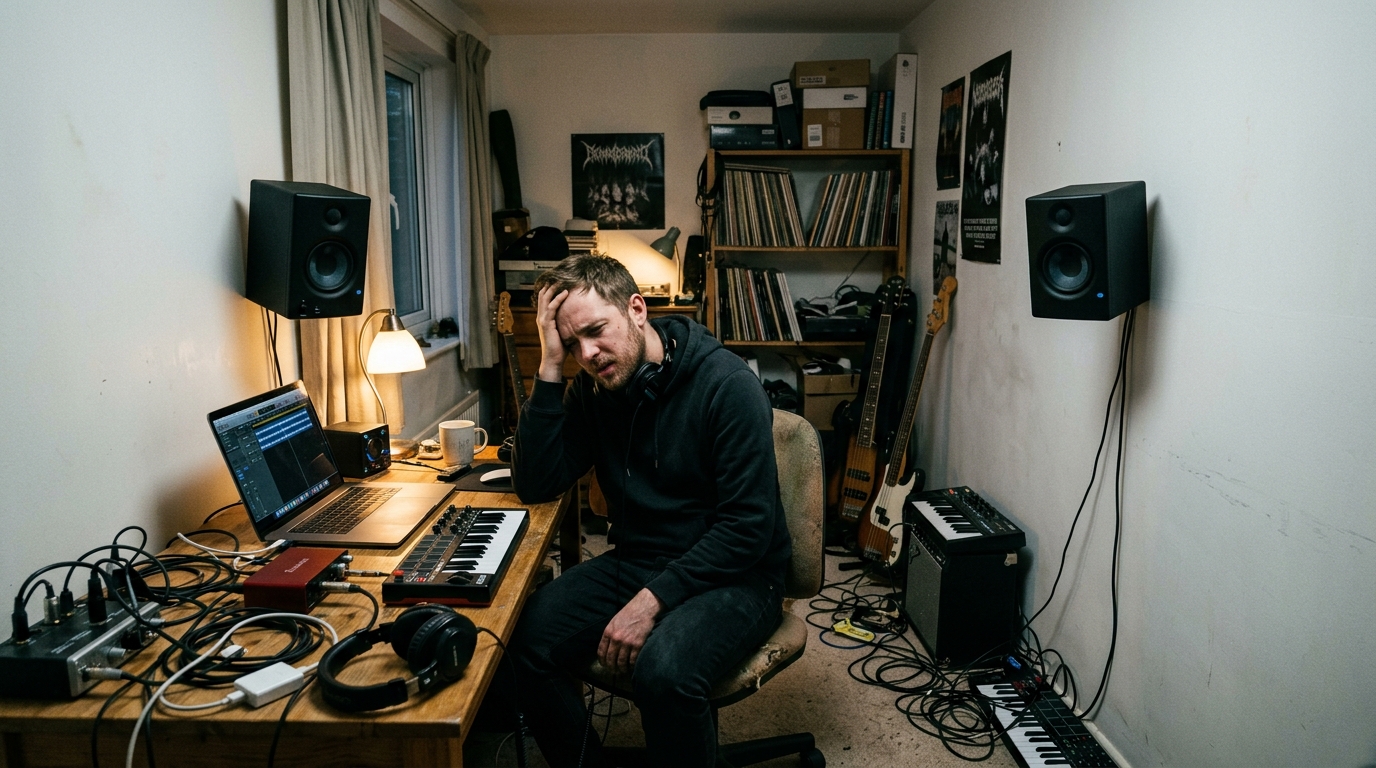
Many music producers believe their mixes sound bad because they need better plugins, expensive monitors, or high-end audio interfaces.
In reality, the biggest problem is often the room itself.
A surprising number of producers spend years upgrading gear while ignoring the environment in which they are making critical decisions.
The Room Is Part of Your Studio
Every room affects sound.
When audio leaves your speakers, it reflects off walls, ceilings, floors, desks, and furniture before reaching your ears.
These reflections interact with the direct sound coming from your monitors.
As a result, certain frequencies may appear louder than they actually are while others may seem quieter.
This makes accurate mixing extremely difficult.
Why Expensive Monitors Do Not Automatically Fix Problems
Many beginners believe professional studio monitors will instantly improve their mixes.
Studio monitors are important, but they can only perform as well as the room allows.
A $2,000 pair of monitors placed in a poor acoustic environment may produce less reliable results than a modest setup in a properly treated room.
Monitoring accuracy matters more than equipment price.
The Biggest Enemy: Room Reflections
One of the most common problems in home studios is early reflections.
Sound bounces off nearby surfaces and reaches your ears shortly after the direct sound.
This can cause:
- Blurred stereo imaging
- Frequency masking
- Poor depth perception
- Inaccurate EQ decisions
Many producers unknowingly mix the room instead of the music.
Bass Frequencies Cause the Biggest Problems
Low frequencies are often the most difficult part of mixing in a home studio.
Bass waves are long and interact strongly with room dimensions.
Common symptoms include:
- Boomy bass
- Weak bass
- Muddy low end
- Inconsistent kick and bass balance
You may boost bass because you cannot hear enough of it in your room, only to discover it sounds overwhelming everywhere else.
Speaker Placement Matters More Than Most People Realize
Even good monitors can perform poorly if positioned incorrectly.
Common mistakes include:
- Placing speakers against walls
- Positioning speakers in corners
- Sitting too close to a wall
- Uneven speaker placement
- Incorrect listening triangle
Small adjustments in speaker placement can dramatically improve monitoring accuracy.
Acoustic Treatment vs Soundproofing
Many beginners confuse these two concepts.
Acoustic Treatment
Improves the sound inside the room.
Examples include:
- Acoustic panels
- Bass traps
- Absorbers
- Diffusers
Soundproofing
Reduces sound transmission between rooms.
Examples include:
- Double walls
- Isolation systems
- Mass-loaded barriers
Acoustic treatment improves your mixes.
Soundproofing mainly affects noise leakage.
Foam Panels Are Not Magic
Many people cover their rooms with thin foam panels and expect professional results.
While foam can help reduce some high-frequency reflections, it does very little to solve low-frequency problems.
Bass frequencies require thicker treatment and proper placement.
A few foam squares on the wall rarely fix a room.
Headphones Are Helpful, But Not Perfect
Many producers switch entirely to headphones when they struggle with room acoustics.
Headphones eliminate many room-related problems but introduce their own challenges.
These include:
- Unrealistic stereo width
- Difficulty judging low frequencies
- Listening fatigue
- Translation issues
The best approach is often using both monitors and headphones as references.
The Monitoring Trap
One reason producers remain stuck for years is because they cannot accurately hear their mistakes.
If your monitoring environment is unreliable, you may repeatedly make the same mixing decisions without realizing they are causing problems.
Better monitoring leads to faster improvement.
How to Improve Your Home Studio
You do not need a professional commercial studio.
Start with:
- Better speaker placement
- First reflection treatment
- Bass trapping
- Reference tracks
- Multiple listening systems
- Consistent monitoring levels
Small improvements can produce significant results.
The Reality
Many producers spend thousands on plugins while ignoring the room they work in every day.
A room that allows you to hear accurately is often a better investment than another plugin bundle.
The quality of your decisions depends on the quality of what you hear.
Final Thoughts
Most home studios sound bad not because of the equipment, but because of monitoring and acoustic issues.
The better you can hear your music, the better your mixing decisions will become.
Before buying another plugin, monitor upgrade, or piece of gear, consider whether your room is helping or hurting your mixes.
A great mix starts with an environment that tells the truth.